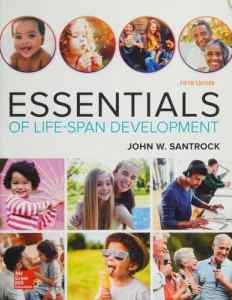
Essentials of Life-Span Development by John W. Santrock (5th Edition) is a foundational developmental psychology textbook that introduces students to human growth and development from conception through death. It emphasizes current research, real-world application, and how developmental psychology applies to everyday life and future careers. The book helps readers understand biological, cognitive, and socioemotional development across the lifespan by integrating research findings with practical examples and offering personalized learning support to improve comprehension and performance.
Overview:
This is an introductory textbook to developmental psychology that explores human growth and change throughout the entire life span — from conception and infancy through childhood, adolescence, adulthood, and into aging and death. It blends theoretical foundations with real-world research and application so students can see how developmental concepts apply to everyday life and future careers.
Core Focus: Emphasizes current research findings and integrates them with practical life examples so readers can understand not just what development looks like, but why it occurs. Shows how biological, cognitive, and socioemotional processes interact at every age and stage. Highlights nature vs. nurture, cultural and individual differences, and lifespan continuity/change. Uses accessible writing and pedagogical features (e.g., summaries, key terms, review questions) to support student learning and critical thinking.
Structure & Topics:
The book is organized chronologically and covers development in distinct life stages with paired focus on physical/cognitive and socioemotional domains, including:
1. Foundations – Introduction to the field, research methods, and major theories.
2. Prenatal & Infancy – Biological beginnings, early sensory, motor, cognitive, and emotional development.
3. Early & Middle Childhood – Growth in thinking, language, schooling, self-concept, peer relations.
4. Adolescence – Identity formation, puberty, cognitive advances, social challenges.
5. Adulthood – Early, middle, and late adulthood changes in career, family, health, cognition.
6. Late Adulthood & End of Life – Aging processes, retirement, loss, coping with death and grief.
Pedagogical Features:
• Real-world applications connect research to everyday experiences.
• Review and critical thinking tools help reinforce concepts.
• Includes cultural and diversity perspectives throughout to deepen understanding.
Fine: Very good condition