Engaging firmly in the debate, this book calls into question the dominance of evidence-based practice and sets out an alternative vision of care which places holism, professional judgment, intuition, and client choice at its center. Bringing together writers from a range of health and social care backgrounds, the book describes the rise of evidence-based practice and explores major criticisms of the approach. It argues that evidence should be seen as part of a broader vision of practice which places equal value on a holistic vision of the needs of patients and clients, professional knowledge and intuition, and seeing patients and clients as partners in their care. Case studies are used throughout the book to help readers link the concepts to practice.

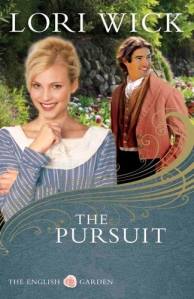




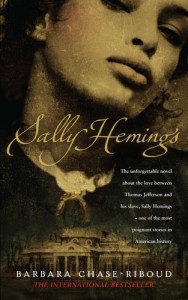
The story, told in alternating time narratives, begins in 1831 when Sally is aproximately sixty years old and is visited by a census taker called Nathan Langdon. With encouragement, Sally recounts her past to him. A past that begins when she passes into the ownership of her half-sister Martha Wyles who marries Thomas Jefferson. After Martha dies, Jefferson goes to Paris where he is joined by his two daughters. Elizabeth Hemings volunteers Sally as their maid, seeing it as Sally’s chance for freedom as slavery has been abolished in France. Jefferson and Sally fall in love and she returns to America with him, on the promises that they will go back to France someday and that she will be the only mistress of his estate in Monticello. Both promises are broken when Jefferson accepts political office and allows his daughter to live at Monticello after her marriage breaks down. Sally realises that nothing has or ever will change for her. A fact borne out when Jefferson dies and his will does not free her. Good: Tidy condition.


Edinburgh is a city whose history is written on its face. The Old Town on its crowded rock, sloping down from the Castle to Holyroodhouse, has not significantly changed its atmosphere since the turbulent fifteenth and sixteenth centuries, when riots, processions, or public executions jammed the High Street. And the very different era that followed the bloody religious wars of the seventeenth century is epitomized by the elegant streets and squares of the New Town – the eighteenth-century Enlightenment whose writers, philosophers and lawyers made Edinburgh famous.
This anthology of extracts from letters, memoirs, diaries, novels and biographies of interesting visitors and inhabitants, including the writings of Scott, Boswell, Cockburn, John Knox and many others, recreates for today’s visitors the drama, the history, and the life of the city in buildings and places that can still be visited. The daring Scottish recapture of the Castle from the English in 1313; the confrontation between Calvinist John Knox and Catholic Mary Queen of Scots in Holyroodhouse; an eye-witness account of the execution of Montrose at the Mercat Cross in 1650; reeking slop-pails in the wynds and polite manners in the ballrooms. . .

In the kingdom of Crotheny, two young girls play in the tangled gardens of the sacred city of the dead where, fleeing an imaginary attacker, they discover the unknown crypt of a legendary, ancestral queen. In the wilds of the forest, while investigating the mass slaughter of an innocent family, the king’s forester comes face-to-face with a monstrous beast found only in folk tales and nightmares.
Meanwhile, travelling the same road, a scholarly young priest begins his education in the nature of the evil that festers just beneath the surface of a seemingly peaceful realm. For the royal family is facing a betrayal that only sorcery can accomplish. And now, for three beautiful sisters, for a young man elevated to knighthood, and for for countless others, a darkness is emerging to shatter all that once seemed certain, familiar, and good.
Numerous separate destinies will become entangled as malevolent forces stalk the land — and the Briar King, that primeval harbinger of death, has awakened from his slumber.
Good Very tidy condition.



An essential biography of one of the Bible’s most influential books
During its 2,500-year life, the book of Genesis has been the keystone to almost every important claim about reality, humanity, and God in Judaism and Christianity. And it continues to play a central role in debates about science, politics, and human rights. With clarity and skill, acclaimed biblical scholar Ronald Hendel provides a panoramic history of this iconic book, exploring its impact on Western religion, philosophy, science, politics, literature, and more.
Hendel traces how Genesis has shaped views of reality, and how changing views of reality have shaped interpretations of Genesis. Literal and figurative readings have long competed with each other. Hendel tells how Luther’s criticisms of traditional figurative accounts of Genesis undermined the Catholic Church; how Galileo made the radical argument that the cosmology of Genesis wasn’t scientific evidence; and how Spinoza made the equally radical argument that the book is a basis for science and that the book of Genesis and science are not necessarily in conflict.
Good: Tidy condition.